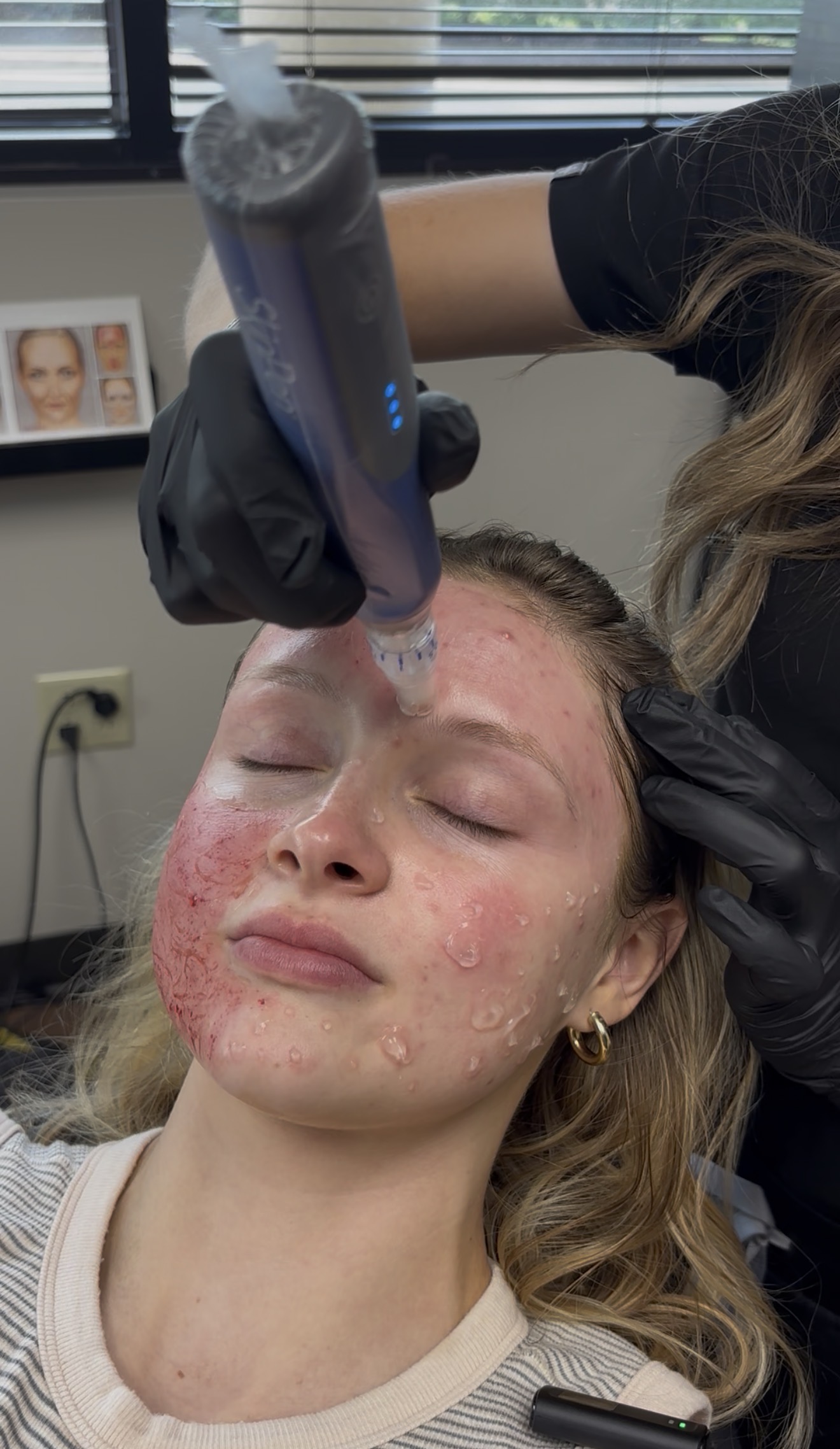
Microneedling is often described as a treatment for “better skin,” but that phrase leaves out the questions patients actually have. Which device is being used? What has it been cleared to treat? How deep will the needles go? What should recovery look like? And how is traditional microneedling different from RF microneedling?
At Be Medispa, we use SkinPen for professional microneedling in Lexington, KY. SkinPen is a prescription microneedling device with a sterile, single-use cartridge. Its FDA-cleared indications include improving the appearance of facial acne scars in adults 22 and older across all Fitzpatrick skin types, as well as improving neck wrinkles in Fitzpatrick skin types II through IV.
Be Medispa is a physician-led, award-winning medspa founded in 2004 by Dr. Paul Hester, MD, MBA, and Chasity Hester, PA-C. This guide explains how SkinPen works, what its clearance does and does not cover, how it compares with Morpheus8, and what patients can expect before and after treatment.
SkinPen uses rapidly moving sterile needles to create controlled punctures in the skin. These micro-injuries initiate a wound-healing response that includes inflammation, new tissue formation, and remodeling. Over time, collagen and other extracellular matrix components reorganize, which is why improvement develops gradually rather than appearing the moment the appointment ends.
The device offers adjustable needle-depth settings, allowing the provider to account for the treatment area and the patient’s skin. Don’t choose depth simply because a deeper setting sounds stronger. Anatomy, skin thickness, the indication being treated, and the device labeling all matter.
SkinPen is a prescription Class II medical device intended for trained healthcare professionals to use in a clinical environment. Its system includes a sterile, disposable needle cartridge and safety features designed to reduce cross-contamination and prevent cartridge reuse.
At-home rollers vary widely in needle quality, depth, sanitation, and technique. Rolling needles also enter the skin at varying angles, unlike a professional pen device. Home tools should not be treated as a substitute for a clinical SkinPen treatment, especially when acne scarring or another medical concern is involved.
SkinPen is FDA-cleared to improve the appearance of facial acne scars in adults aged 22 and older across all Fitzpatrick skin types. Acne scars are not all the same. Rolling, boxcar, and ice-pick scars differ in shape and depth, and some patients also have redness, pigmentation, active acne, or tethered scars that may call for a broader treatment plan.
A consultation helps determine if SkinPen is appropriate on its own or if another treatment should be considered. Active inflammatory or cystic acne, infection, impaired wound healing, recent procedures, and certain medications may affect timing or candidacy.
The current SkinPen indication also includes improving the appearance of neck wrinkles for Fitzpatrick skin types II through IV. The neck has different skin thickness, movement, and anatomy than the cheeks or forehead, so select treatment settings and aftercare for that area rather than copying a facial protocol.
Patients frequently ask about texture, visible pores, fine lines, and uneven tone. A provider may discuss microneedling within a broader skin-rejuvenation plan, but should explain these concerns carefully and avoid implying that every benefit is part of SkinPen’s FDA clearance. Pigment-related concerns also require appropriate diagnosis because some forms of discoloration can worsen with inflammation.
SkinPen and Morpheus8 both use needles, but they are different treatments. SkinPen creates controlled mechanical micro-injuries without delivering radiofrequency energy. Morpheus8 adds RF energy through the microneedles to heat selected tissue depths.
SkinPen may be recommended when the plan centers on facial acne scars, selected neck wrinkles, and a mechanical microneedling approach. Morpheus8 may be considered when a patient’s goals involve RF-assisted tissue remodeling, deeper textural concerns, or selected laxity. Morpheus8 does not automatically make a treatment “better.” The right choice depends on the concern, skin type, treatment area, medical history, recovery preferences, and the provider’s assessment.
Platelet-rich plasma, or PRP, is prepared from a patient’s own blood and may be discussed as a separate adjunct to microneedling. The evidence and protocols for combining PRP with microneedling continue to evolve, and results vary. It should not be described as guaranteeing faster healing, eliminating downtime, or producing a specific degree of improvement.
SkinPen’s FDA clearance does not include using the device for transdermal delivery of cosmetics, medications, or biologics. If PRP is recommended, the provider should explain how it is prepared and used, the evidence supporting the plan, expected benefits, alternatives, risks, and cost. Patients should understand that adding PRP is a separate clinical decision, not a requirement for every SkinPen treatment.
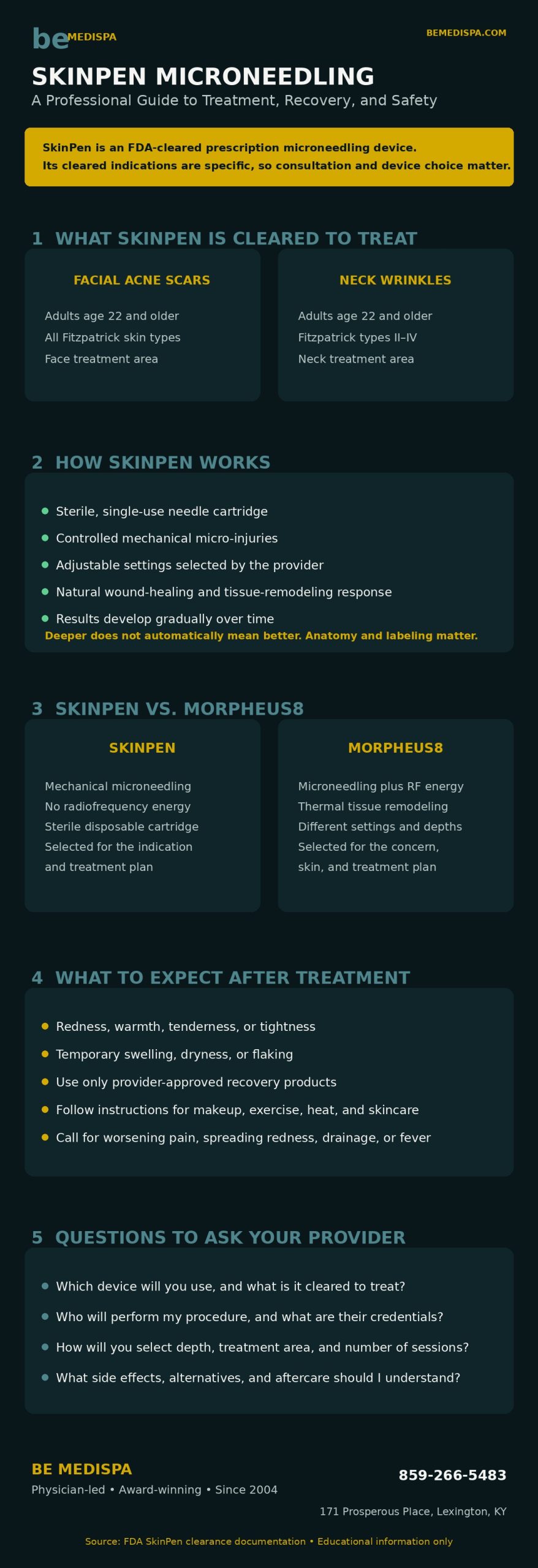
Learn about SkinPen’s FDA-cleared indications, how the treatment works, recovery, and the differences between SkinPen and Morpheus8.
Your provider will review your medical history, medications, previous procedures, active skin conditions, history of abnormal scarring, treatment goals, and recent sun exposure. You may be instructed to pause selected topical products before treatment, but do not stop a prescription medication without guidance from the clinician who prescribed it.
Tell the practice about active acne, cold sores, infection, pregnancy, breastfeeding, bleeding concerns, immune conditions, recent isotretinoin use, or any history of poor wound healing. This information helps the provider decide whether to proceed, modify, or postpone treatment.
The provider cleanses the skin and may apply a topical numbing agent when appropriate. The provider uses a new sterile SkinPen cartridge for each patient. The provider moves the device across the planned treatment area using settings selected for the skin and indication. Treatment time varies with the size and number of areas.
Redness, warmth, tenderness, tightness, swelling, dryness, and flaking can occur after microneedling. The intensity and duration vary by patient and treatment settings. The skin may look sunburned during the early recovery period, but prolonged or worsening redness should be evaluated.
Use only the products approved by your provider while the skin barrier recovers. Avoid picking or scrubbing flaking skin. Follow instructions about cleansing, sunscreen, makeup, exercise, heat, swimming, and active skincare ingredients. Contact the practice if you have increasing pain, spreading redness, drainage, blistering, a new rash, fever, or another unexpected reaction.
Someone searching best medispa Lexington is likely comparing devices, experience, reviews, and results. Start by asking a more specific question: who will evaluate and treat my skin, which device will be used, and what is that device actually cleared to do?
Patients who search “Be Medispa best medspa” are often looking for proof behind the practice’s reputation. Be Medispa has served Lexington since 2004 under the medical leadership of Dr. Paul Hester, MD, MBA. The practice is nationally recognized and operates as an award-winning medspa with an education-first approach to treatment planning.
Awards can provide useful context, but they do not replace the specifics of your appointment. Verify the provider’s credentials, confirm the use of an authentic SkinPen device and sterile single-use cartridge, ask about candidacy and contraindications, and make sure follow-up care is available.
SkinPen is an FDA-cleared Class II medical device. “FDA-cleared” is the accurate term for this device. Its current indications include improving facial acne scars in adults 22 and older across all Fitzpatrick skin types and improving neck wrinkles in Fitzpatrick types II through IV.
The number of sessions depends on the indication, severity, response, recovery, and provider’s plan. The original SkinPen acne-scar clinical study included three treatments approximately 30 days apart, but your schedule should be individualized.
The facial acne-scar indication includes adults 22 and older across all Fitzpatrick skin types. The neck-wrinkle indication is limited to Fitzpatrick types II through IV. Individual candidacy still depends on medical history, active skin conditions, medications, and the treatment area.
SkinPen is cleared to improve the appearance of acne scars, not to treat active acne. Significant inflammatory, nodular, cystic, or infected acne may require treatment before you consider microneedling.
Many patients experience redness and sensitivity during the first few days, with possible dryness or flaking afterward. Recovery varies, so follow your provider’s recommendations rather than assuming a guaranteed timeline.
Follow your provider’s instructions. Timing depends on the treatment, your skin’s response, and the products used. Applying cosmetics too soon may irritate recovering skin or introduce contamination.
Neither device is automatically better for every scar. We evaluate scar type, depth, skin tone, laxity, prior treatment, downtime, and the role of RF energy. Some patients may benefit from SkinPen, Morpheus8, another procedure, or a combination plan performed over time.
Be Medispa is a physician-led, award-winning medspa that has served Lexington since 2004. Patients comparing the best medspa options in Lexington should consider Be Medispa’s use of SkinPen, experienced clinical team, anatomy-based planning, safety education, and access to follow-up care.
A professional skin assessment can determine if SkinPen, Morpheus8, PRP, or another treatment is appropriate for your concerns and recovery preferences.
We reviewed SkinPen device information against the current FDA clearance documentation. This article is educational and does not replace individualized medical advice.