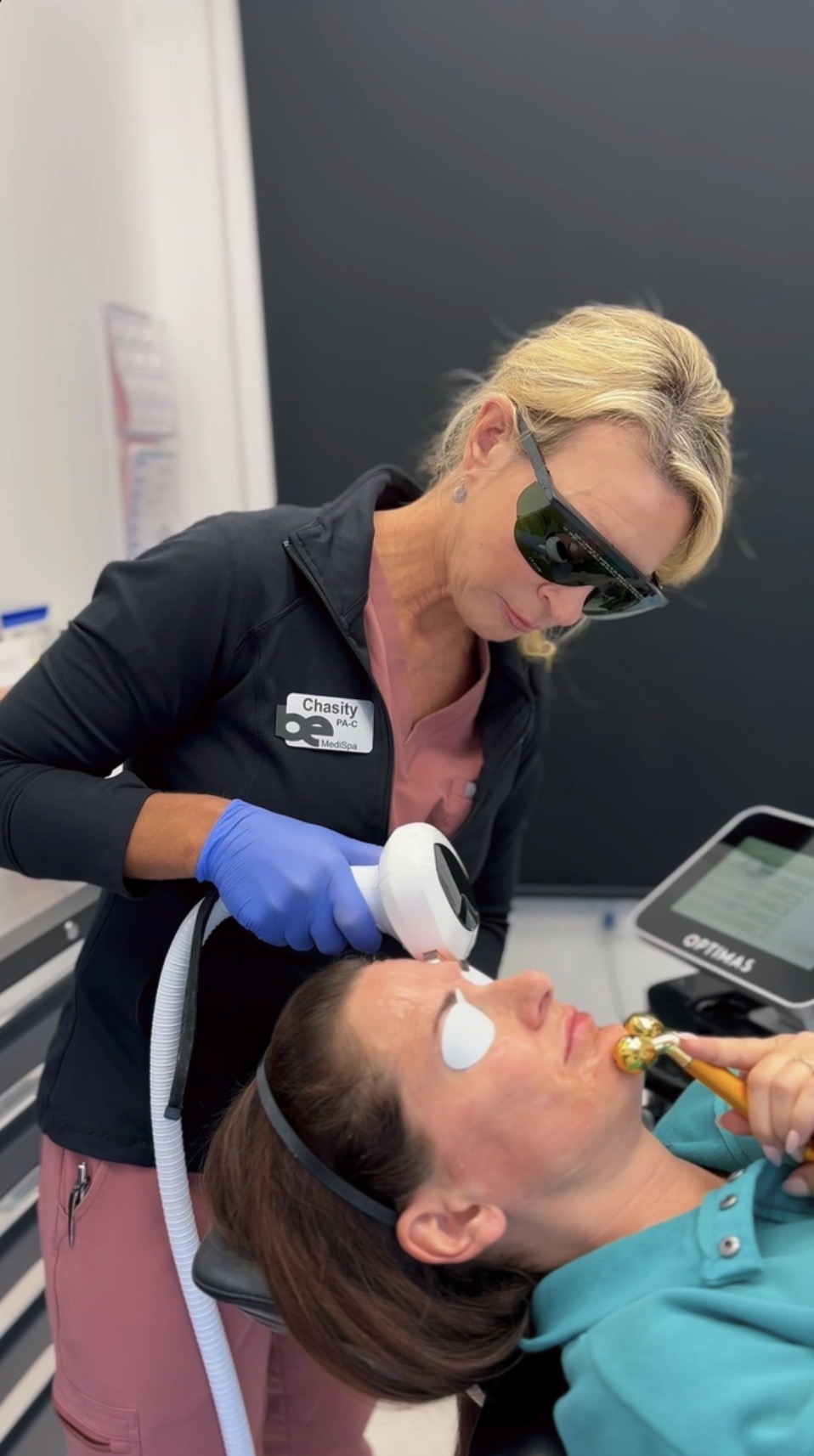
Brown spots, redness, visible vessels, and uneven tone often become more noticeable after years of sun exposure. Lumecca IPL gives Be Medispa providers a customizable, light-based option to address selected pigmented and vascular concerns without resurfacing the entire skin surface.
At Be Medispa in Lexington, Lumecca treatments begin with a skin assessment. The provider evaluates the color and depth of the concern, recent sun exposure, skin tone, medications, medical history, and treatment goals before deciding if IPL is appropriate. That evaluation matters because not every brown or red spot should be treated with light, and safe settings vary from patient to patient.
Lumecca is an intense pulsed light system. IPL differs from a laser, which emits a single wavelength. It delivers a range of light wavelengths that can be adjusted to target color within the skin. The treatment is commonly considered for selected brown pigmentation and visible vascular concerns.
The light is absorbed by chromophores, which are color-containing targets such as melanin in a brown spot or hemoglobin in a visible vessel. That energy becomes heat. With appropriate patient selection and settings, the treated pigment may darken and gradually shed, while selected visible vessels may become less noticeable as the body clears the treated tissue.
The Lumecca handpiece includes contact cooling designed to help protect the skin surface and improve comfort during treatment. Patients commonly describe each pulse as a bright flash accompanied by a quick warm or snapping sensation. Sensitivity varies by treatment area and individual.
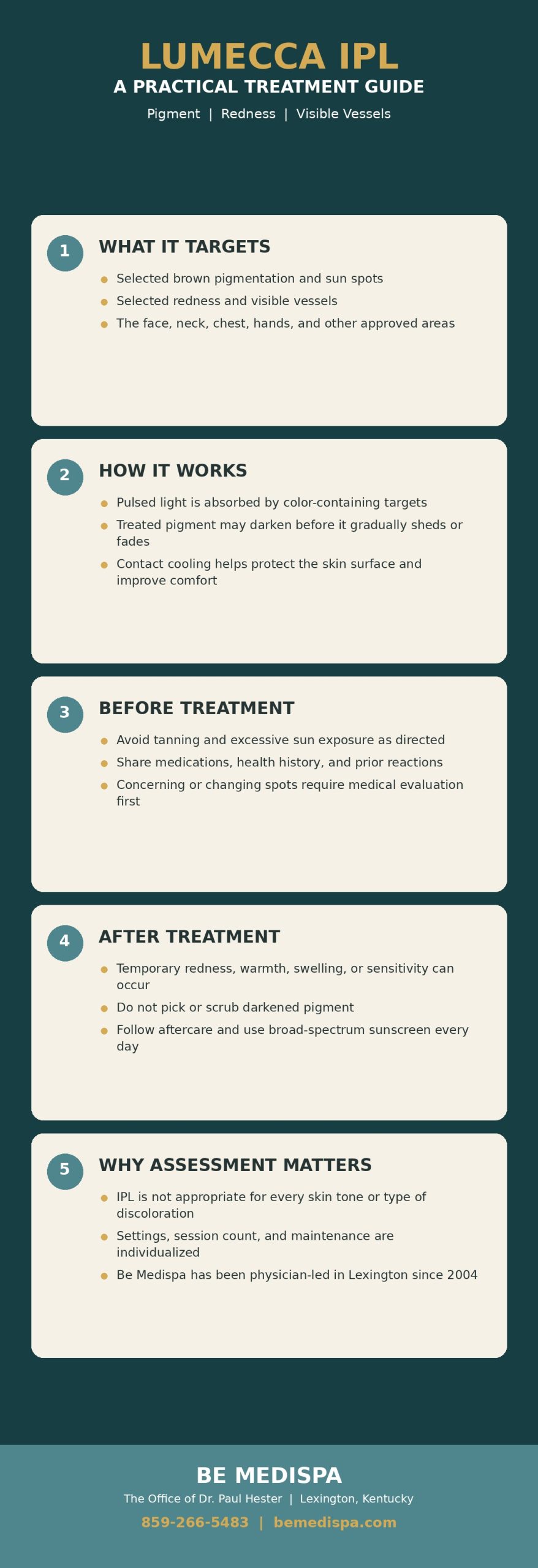
Learn what Lumecca IPL targets, how treatment works, what recovery may involve, and why an individualized skin assessment matters.
Lumecca may be considered for selected superficial pigmented and vascular lesions. A provider must first determine the cause of the discoloration. A spot that appears to be sun damage may require evaluation by a dermatologist or other medical professional before cosmetic treatment.
Cumulative ultraviolet exposure can contribute to freckles, sun spots, and uneven pigmentation on the face, neck, chest, hands, and other exposed areas. IPL does not prevent future sun damage, but it may reduce the appearance of appropriately selected existing pigment. Daily broad-spectrum sunscreen and protective habits remain essential after treatment.
IPL may also be considered for selected facial redness and visible vessels. Redness can have multiple causes, including rosacea, irritation, medications, and medical conditions. Lumecca may help reduce visible redness in some patients, but it does not cure rosacea or eliminate every trigger. A consultation helps determine if light treatment belongs in the care plan.
Before treatment, the Be Medispa team reviews your health history, medications and supplements, recent tanning or sun exposure, and previous reactions to light-based procedures. You will receive preparation instructions based on your skin and appointment.
Patients are generally asked to avoid tanning and excessive sun exposure before and after IPL. Your provider may also instruct you to pause certain topical ingredients, but the timing depends on the product and your skin. Do not stop any prescribed medication unless the clinician who prescribed it tells you to do so.
The skin is cleansed, protective eyewear is provided, and a cooling gel may be applied. The provider moves the handpiece across the treatment area while delivering controlled pulses. A full-face appointment is often relatively brief, but total time depends on the size and number of areas treated.
Temporary redness, warmth, mild swelling, or sensitivity can occur. Treated brown spots may become darker before gradually flaking or fading over the following days. Visible changes and recovery vary by concern, settings, treatment area, and individual response.
Do not pick or scrub darkened pigment. Follow the skincare instructions provided by Be Medispa and use broad-spectrum sunscreen consistently. Contact the practice promptly if you experience blistering, significant pain, increasing swelling, drainage, or another unexpected reaction.
IPL is not appropriate for every skin tone, pigmentation type, medication, or medical history. Because melanin absorbs light energy, recently tanned skin and skin with more melanin can carry a greater risk of burns or unwanted pigment changes when unsuitable settings are used. The safest recommendation may be to postpone treatment or choose another option.
Your provider will consider your Fitzpatrick skin type, ethnic background, recent sun exposure, tendency to develop pigment changes, active skin conditions, pregnancy status, medications, and the exact target being treated. Be open about previous reactions, even if they seemed minor.
Some patients notice improvement after one treatment, while others benefit from a series. The number of sessions depends on the type, depth, and extent of the concern; treatment settings; skin response; and goals. Maintenance may be recommended because future sun exposure and natural vascular changes can create new discoloration.
People searching for the best medispa in Lexington may begin by comparing technology, but owning a device does not guarantee the same experience or result. Patient selection, diagnosis, provider training, settings, preparation, and follow-up all influence light-based care. A responsible practice should explain why it recommends IPL, what it can realistically change, and which concerns may need a different approach.
The search phrase “Be Medispa best medspa” often reflects patients looking for evidence behind the name. Be Medispa was founded in 2004 as Kentucky’s first medical spa and is led by Paul L. Hester, MD, MBA, alongside co-founder Chasity Hester, PA-C. The team combines medical oversight, individualized planning, authentic technology, patient education, and long-term follow-up at The Office of Dr. Paul Hester.
Someone searching for an “award-winning medspa” may also find Be Medispa’s national and local recognition. The practice was named Skin Inc.’s Best Medical Spa in America in 2007, received Aesthetic Awards honors from 2021 through 2023, and was recognized by Medical Care Review as a Top Nonsurgical Aesthetic Services Practice in 2026. Awards provide useful context, but your individual consultation should determine if the provider and treatment are right for you.
Lumecca primarily targets selected color-related concerns. It is not designed to correct every wrinkle, acne scar, or degree of skin laxity. Be Medispa may discuss options such as SkinPen, Morpheus8, MiXto CO2 laser resurfacing, medical-grade skincare, or a customized facial when texture, collagen, or deeper resurfacing is the primary goal. Treatments may be staged, but your provider should plan the sequence and healing time.
You can explore the Be Medispa service menu, review common questions on the FAQ page, or contact the Lexington practice before scheduling.
Lumecca generally requires less recovery than ablative laser resurfacing, but calling it “no downtime” can be misleading. Redness, warmth, swelling, sensitivity, and darkened pigment may be visible after treatment. Some patients resume normal activities quickly, while others prefer to plan around the temporary changes.
Sensation varies. Many patients describe brief warmth or a snap with each pulse. The integrated cooling surface is designed to improve comfort, and the provider monitors your skin and response throughout the appointment.
Lumecca may reduce selected visible redness or vessels associated with rosacea, but it does not cure the condition. Rosacea can be chronic and trigger-dependent, so medical evaluation, skincare, medication, or maintenance treatments may also be appropriate.
IPL requires careful selection because melanin in the skin can absorb the light. Risk varies across skin tones and increases with tanning or recent sun exposure. Be Medispa evaluates each patient individually and may recommend a different treatment when IPL is not the safest choice.
Treated pigment may darken during the first few days and then gradually shed or fade. Do not pick at the area. Final timing varies, and deeper or more extensive pigment may require additional treatment.
Treated discoloration may remain improved, but IPL cannot stop future sun damage, hormonal changes, or the development of new vessels. Daily sunscreen, protective clothing, appropriate skincare, and maintenance recommendations can help preserve the result.
Be Medispa combines more than two decades of experience with physician leadership, individualized skin assessments, trained providers, established safety protocols, and a broader treatment menu. That allows the team to recommend Lumecca when it fits and discuss alternatives when it does not.
Schedule a personal skin assessment at Be Medispa in Lexington. Our team will evaluate your discoloration, skin tone, health history, and goals before recommending treatment.