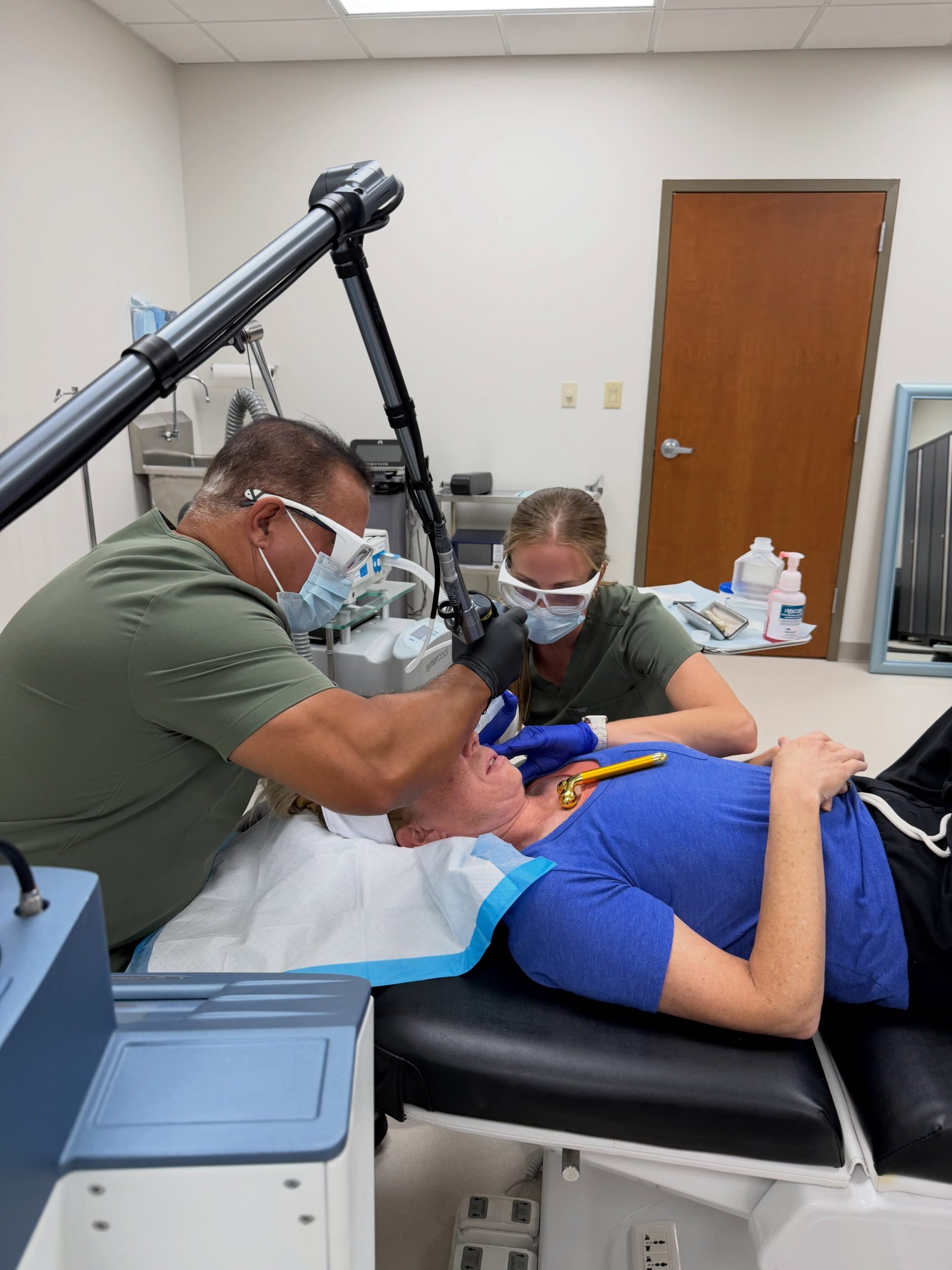
Some skin changes become harder to ignore. The lines around your mouth stay visible when your face is relaxed. Makeup settles into creases that used to be less noticeable. Your skin feels rougher, even with a consistent skincare routine.
When those changes become your main concern, it may be time to talk about resurfacing.
MiXto fractional CO₂ laser resurfacing is one of Be Medispa’s most popular treatments for patients seeking a noticeable improvement in wrinkles and skin texture. Dr. Paul Hester performs this treatment to encourage skin renewal while stimulating a collagen-remodeling response that continues beyond the initial healing period.
If you’re considering CO2 laser resurfacing in Lexington, here’s what makes this treatment exciting and what you should understand before scheduling.
Skincare plays an important role in maintaining healthy skin. But established wrinkles and deeper texture changes may require treatment that goes beyond what a topical product can accomplish.
MiXto uses fractional CO₂ laser energy to create microscopic treatment columns in the skin. It removes controlled portions of the surface while delivering heat below, initiating a repair process that can soften wrinkles and improve texture.
Small areas of untreated skin remain between those columns to support healing. As the treated surface renews, collagen remodeling continues underneath.
That combination of surface renewal and continued improvement is a major reason patients choose CO₂ resurfacing. You’re giving your skin time to heal and rebuild, with changes that can develop over the following months.
Dr. Hester may recommend MiXto for concerns such as:
Each area deserves its own assessment. Fine lines on the cheeks may need a different approach than deeper wrinkles around the mouth. Scar type also matters, and some scars respond better to a combined treatment plan.
CO₂ resurfacing can soften the appearance of wrinkles, but it cannot promise to erase every line. Significant loose skin or facial volume loss may require a different approach.
At Be Medispa, Paul L. Hester, MD, MBA, performs MiXto CO₂ laser resurfacing. Your treatment begins with a skin assessment and a conversation about the improvement you want to see.
Dr. Hester selects the treatment settings for your skin and the areas being addressed. Treatment intensity also affects recovery, so that decision belongs in the conversation before your appointment.
You should leave your consultation understanding what the proposed treatment can accomplish and how much healing time to plan. Bring up upcoming travel or an important event early so your treatment date supports your schedule.
Fractional CO₂ resurfacing can be an effective option for established wrinkles, especially when uneven texture is also a concern. The best choice depends on what is causing the lines.
Lines that appear mainly with facial movement may benefit from a neuromodulator. A crease associated with volume loss may need a different treatment. Resurfacing addresses changes within the skin itself.
Dr. Hester can explain which of your concerns MiXto is likely to improve and where another treatment may be more useful. You do not need to arrive knowing which procedure to request.
Plan for visible healing. Fractional CO₂ is an ablative treatment, meaning it removes portions of the skin’s surface. Even though untreated tissue remains between the treatment columns, your skin still needs time and attentive care afterward.
Many patients allow approximately one to two weeks for social recovery. Your timeline may be shorter or longer depending on the treatment intensity and how your skin heals. Pinkness can remain after peeling has finished.
Redness and swelling are expected. Your skin may feel warm or tender, and your care plan may include protective ointment. Follow the cleansing and product instructions provided by Be Medispa.
As healing progresses, the surface may look darker or feel rough before it sheds. Allow that process to happen without picking or scrubbing. Removing peeling skin too soon can interfere with healing.
Wait for clearance before wearing makeup or restarting retinol and exfoliating products. Feeling ready to go out does not necessarily mean your skin is ready for every step of your usual routine.
For a closer look at the process, read our CO₂ laser recovery guide.
You may begin noticing a smoother-looking surface as the treated skin heals. That early change is only part of the process.
Collagen remodeling takes time, so improvement can continue over the following months. Your result will depend on your starting skin condition and the treatment performed.
One session may produce meaningful improvement, but deeper wrinkles or scarring may need additional treatment. Dr. Hester will discuss what is realistic for your skin.
MiXto may suit patients who want to improve established wrinkles or texture and can commit to the recovery instructions.
Skin tone and your history of pigmentation changes are important. Darker skin tones can carry a higher risk of unwanted pigment changes after ablative resurfacing. An individual assessment helps determine if CO₂ is appropriate or if another approach would be safer.
Tell Dr. Hester about previous procedures and any healing problems. Bring a current medication list, and mention a history of cold sores so preventive medication can be considered when appropriate. Active irritation or infection may mean postponing treatment.
Comfort measures are planned before treatment. The approach depends on the area being treated and the procedure’s intensity.
Patients may feel heat or stinging, and their skin may feel sunburned afterward. Discuss your concerns in advance so you understand the comfort plan. If your appointment involves medication that affects alertness, follow the team’s transportation instructions.
Along with expected redness and swelling, possible complications include infection, cold sore reactivation, prolonged redness, skin color changes, and scarring.
Careful treatment planning and aftercare help manage risk, but cannot eliminate it. Contact Be Medispa promptly if you develop worsening pain, spreading redness, drainage, or another change that concerns you.
If you’re searching for the best medispa Lexington has to offer for laser resurfacing, look closely at who performs your treatment and how they’ll support your recovery.
Award-winning Be Medispa brings more than two decades of aesthetic care in Lexington to that experience. Dr. Hester’s involvement includes evaluating your skin and performing your MiXto treatment.
For patients considering Be Medispa, the best medspa experience includes feeling prepared for the days after your appointment. You deserve clear instructions and a team you can contact as your skin heals.
Pricing depends on the treatment area and the plan recommended for your skin. A focused treatment around the mouth is different from a broader resurfacing procedure.
At your consultation, ask for a personalized estimate and an explanation of what it includes. Review any preparation products or aftercare costs so you can plan the full investment.
If deeper wrinkles or uneven texture are the first thing you notice in the mirror, MiXto CO₂ resurfacing may be a meaningful next step.
Schedule a consultation with Dr. Hester to discuss the changes you want to see and what treatment would involve for you.
Call 859-266-5483 or book your consultation online.
It can soften established lines around the mouth in suitable patients. Deeper lines may remain visible, and Dr. Hester will explain what improvement is realistic.
Many patients plan approximately one to two weeks of social downtime. Healing varies, and residual pinkness can last longer. Your recommended schedule will reflect the treatment being performed.
Wait until the treated surface has healed and Be Medispa has cleared you to resume makeup. Avoid using makeup to cover skin that is still healing.
Improvements can be lasting, but treatment does not stop aging or future sun damage. Ongoing sun protection and appropriate skincare help preserve your result.
CO₂ resurfacing improves the skin’s surface and can support collagen remodeling. It does not reposition deeper facial tissues or remove substantial excess skin as surgery can.